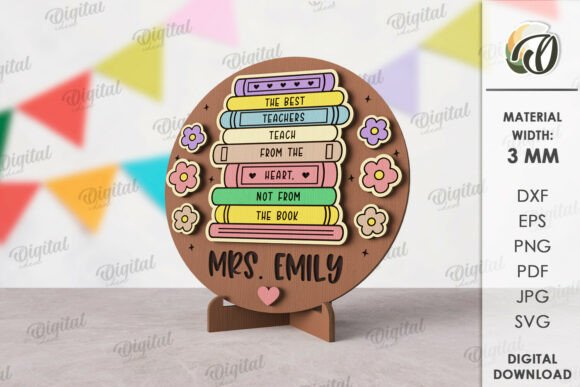
Teacher Table Decor Laser Cut
As a designer who’s spent years working with machine embroidery designs, I always start by evaluating a new file based on its visual appeal, practicality, and how it translates to real-world use. Teacher Table Decor Laser Cut caught my attention as a digital design meant for laser engraving, but I wanted to see how it would perform in an actual embroidery project. Let’s break down what this design offers and where it might shine—or fall short.
First Impressions: A Design That Speaks to Educators
The Teacher Table Decor Laser Cut has a clean, professional aesthetic that feels right at home in educational settings. The shape is simple but meaningful—think of a stylized teacher’s desk or a classroom-themed emblem. The layout is balanced, with enough detail to make it visually engaging without being overwhelming. It’s the kind of design that could work well on custom apparel, like a sweatshirt or tote bag for teachers, or as a decorative element on a pillow or apron.
The theme is clear and specific, which makes it ideal for niche markets. If you’re targeting educators, school staff, or even parents looking for personalized gifts, this design could be a strong fit. However, it’s not the type of piece that would work well for general-purpose projects. Its focus on a single, specific concept means it needs to be used thoughtfully.
Real-World Use: Where It Shines and Where It Fails
When testing Teacher Table Decor Laser Cut on different fabrics, I found that it works best on medium-weight materials like cotton, canvas, or woven blends. On thin or stretchy fabrics, the design can appear distorted or lose definition, especially if the hoop size isn’t large enough. For example, trying to stitch it on a baby onesie or a cap could lead to issues if the design isn’t scaled properly.
The level of detail is decent, but it’s not something that would work well in small hoop sizes. If you’re using a 4x4 inch hoop, you might find that some elements are too cramped, leading to poor stitching quality. This design is better suited for larger hoops, which allows for more accurate representation of the original file.
For applique designs, this one could work, but you’d need to ensure that the edges are clean and the satin stitch is tight. If you're planning to use it on a sweatshirt or tote bag, the thread color contrast is key. A dark fabric might require a lighter thread to stand out, while a light fabric could benefit from a bold, contrasting color.
Considerations for Commercial Use
If you’re an Etsy seller or a small shop owner looking to add this design to your product line, there are a few things to keep in mind. First, test the design on different fabric types before finalizing any listings. A printable mockup can help you visualize how it will look on a finished product, whether it's a custom t-shirt or a holiday gift.
Also, check the licensing terms carefully. Since this is a digital product, you’ll need to confirm whether it’s allowed for commercial use. Some files come with restrictions that could limit your ability to sell items featuring the design. Always double-check the terms before moving forward.
Practical Tips for Embroidery Designers
- Test on scrap fabric first: Before committing to a full project, try stitching the design on a sample piece of fabric to see how it looks and performs.
- Check thread color contrast: Ensure the chosen thread color complements the fabric and highlights the design effectively.
- Review stitch density: Too much density can cause the fabric to pucker or the stitches to look cluttered.
- Confirm hoop size: Make sure the design fits comfortably within your hoop to avoid distortion or misalignment.
- Inspect small details: Zoom in on the file to check for any tiny elements that may not translate well during stitching.
- Test in black and white mockups: This helps identify any issues with visibility or clarity before adding color.
- Compare light and dark fabric backgrounds: Some designs may look great on one color but not on another.
- Use proper stabilizer: Especially important for thin or stretchy fabrics, stabilizer can prevent puckering and improve overall appearance.
- Check for commercial use rights: Confirm whether the design is suitable for resale or if it requires additional licensing.
- Confirm licensing before selling: Don’t assume the design is free to use—always verify the terms.
Final Thoughts: A Design with Purpose
Teacher Table Decor Laser Cut is a design that feels purposeful, but it’s not a one-size-fits-all solution. It works best in specific contexts—like custom apparel for educators, classroom decor, or personalized gifts. However, it requires careful consideration when it comes to fabric choice, hoop size, and stitching technique.
If you’re looking for a design that adds value to your handmade products or digital offerings, this could be a good option. Just make sure to test it thoroughly and understand its limitations. With the right approach, it can become a valuable addition to your embroidery project library.