Best Seat in the House 3D Light Box
First Impressions: A Whimsical Twist on Everyday Items
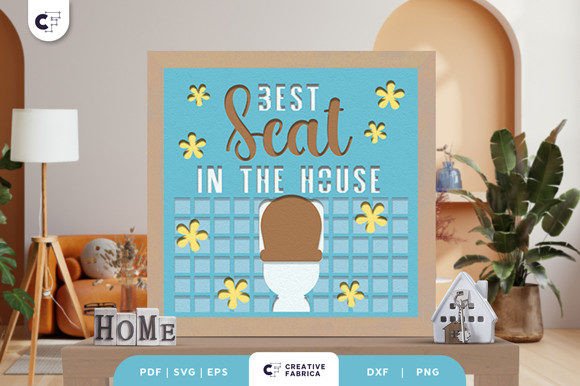
The Best Seat in the House 3D Light Box immediately catches the eye with its playful and unexpected theme. It’s not your typical floral design—it’s a clever nod to bathroom humor, wrapped in soft, elegant floral accents. The composition is clean, with the bold text “Best Seat in The House” centered above a stylized toilet. This mix of whimsy and refinement makes it ideal for projects that aim to surprise and delight without being too overt.
The 3D SVG format offers depth and dimension, which translates well into embroidery. It’s a design that feels at home on custom apparel, baby items, or even as an embroidered patch for a quirky tote bag. Its visual personality is light-hearted but still sophisticated enough for a variety of applications.
Real-World Embroidery Use Cases
As an embroidery designer, I’ve tested this design on several fabrics and project types. It works particularly well on tote bags, sweatshirts, and aprons—items that allow for larger hoop sizes and more space to showcase the detail. The floral elements add a soft touch, while the main text remains clear and readable even at smaller sizes.
For baby items like onesies or blankets, the design adds a fun, personalized element that parents might appreciate. However, the size and complexity may require careful placement to avoid overwhelming the garment. On caps or hats, the curved surface can be a challenge, so testing on a mockup is essential before committing to a full run.
This design also has potential as a holiday or wedding gift. The unique theme could work well as part of a personalized gift set, especially if paired with other themed designs. It’s not the most traditional choice, but that’s what makes it stand out.
Where to Be Cautious
While the Best Seat in the House 3D Light Box is visually appealing, there are some situations where it might not perform as well. Small hoop sizes can limit how much of the design you can stitch at once, potentially leading to misalignment or incomplete stitches. Textured or stretchy fabrics may cause the design to distort, especially if proper stabilizer isn’t used.
Thin or dark fabrics can also be problematic. The design relies on contrast between the embroidery and the background, so on dark materials, thread color choices become critical. Tiny lettering or intricate details may get lost if the stitch density is too low or if the design is scaled down too much.
If you’re planning to use this on layered garments or products that will see frequent washing, consider how the design will hold up over time. The satin and fill stitches used in the design may fray or pucker if not properly stabilized.
Impact on Visual Appeal and Customer Perception
When stitched correctly, the Best Seat in the House 3D Light Box adds a unique visual element that can elevate a handmade product or custom apparel. It’s a conversation starter, which can help increase engagement, especially on platforms like Etsy or at craft fairs.
From a commercial standpoint, the design’s originality can boost the perceived value of a product. Customers often appreciate something that stands out from the crowd, and this design does just that. It can also serve as a strong branding tool for small shops looking to create a memorable identity.
However, it’s important to ensure that the design aligns with your brand’s aesthetic. If your shop leans toward more traditional or minimalist styles, this might not fit well. But for businesses targeting a more humorous or niche audience, it can be a powerful asset.
Practical Designer Notes
Before using the Best Seat in the House 3D Light Box in any project, always test it on scrap fabric. This helps identify any issues with stitch density, thread color contrast, or stabilizer needs. Check whether the design works in black and white mockups to see how it looks on different backgrounds.
For commercial use, confirm that the design is licensed appropriately. Even if it’s a digital embroidery file, you don’t want to risk legal issues when selling finished products. Also, make sure the design scales well for both personal and commercial projects.
When working with applique designs or those with multiple layers, pay close attention to how the stitches interact. The floral elements may require a combination of satin and fill stitches to maintain their shape and texture. For delicate areas, running stitch might be more suitable than dense fill stitches.
Finally, always use the right stabilizer for the fabric you’re working with. This ensures that the design stays crisp and doesn’t shift during stitching. Whether you’re creating an embroidered patch, a tote bag design, or a custom sweatshirt, these tips can help you achieve professional results.